Event
The Conflict over Emparis
Period
on
January 1, 1366
Location
The Emparis Plateau
Source
Paul-Louis Rousset, Au Pays de la Meije
This narrative is based on the memory of our community. It may be enriched and corrected over time as new information emerges.
Shared by admin.
Event narrative
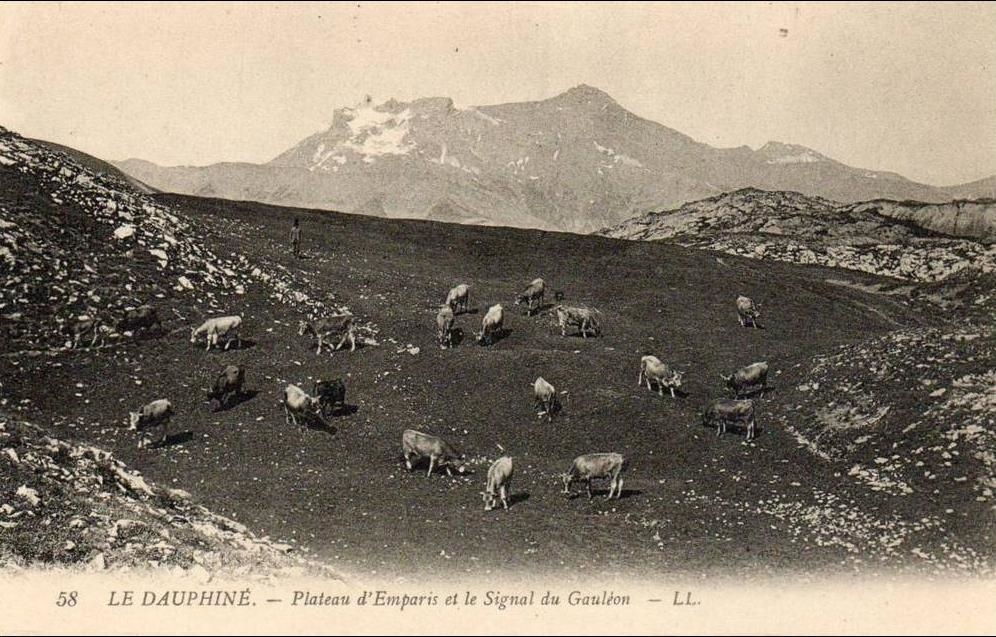
The Emparis Plateau lies at the heart of a legal dispute that had been ongoing since 1366. A stubborn conflict opposed La Grave, Besse, and Mizoën over high pastures reputed to be among the finest in the Alps, and essential to the survival of mountain communities. In 1366, the community of La Grave claimed rights over these alpine pastures that it described as immemorial, to the point that its neighbors considered it arrogant and domineering. This attitude fueled tensions with Besse and Mizoën, which were defending vital needs: without pasture, there could be no livestock; without livestock, there could be no life in the mountains. At the beginning of the 16th century, Mizoën became directly involved in the conflict. Its shepherds led their animals to Rif-Tord, where the field guard of La Grave discovered six hundred sheep from Mizoën. The verdict fell: Mizoën was ordered to pay compensation and was denied access to the pastures without authorization. At that point, the Dauphin’s authorities clearly supported La Grave, probably because they were sensitive to its prosperity. The quarrels continued. Besse in turn entered into open conflict with La Grave, pointing out that it paid heavy dues to the Dauphin for its meadows and that its barns dotted these mountains, unlike those of La Grave. Lawsuits followed one another, endless and violent. Tired of the dispute, the judge sent both sides away: in 1489, he affirmed the exclusive authority of the Dauphin over Rif-Tord and prohibited any use without his approval. In the 16th century, the affair took another turn: the pastures were leased to individuals from Besse and Mizoën. In 1535, Jacques Vieux of Mizoën became farmer of the mountain for two years. La Grave tried to regain control through a perpetual lease, but Mizoën won its case before the Parliament until the end of the lease. In 1548, after consultations and passionate bidding, Mizoën obtained the albergement in exchange for a heavy annual rent. It was then recognized that, without these alpine pastures, the inhabitants would be forced to abandon the country. In 1555, a royal edict authorized the sale of crown lands. Tradition claims that Mizoën purchased part of the mountain, but the deed has disappeared. History then sometimes slips into legend: the disappearance of a mayor of Besse, boundary stones moved and hidden stones, stories passed down by rival communities. Nothing was settled afterwards. In the 17th and 18th centuries, lawsuits continued, with each community winning in turn. Even in the 19th century, between 1816 and 1851, the conflicts flared up again. Thus stretched, over more than five centuries, a fierce struggle for pastures that were far more than property: they were the very condition of life in Mizoën and throughout the upper valley.
Visual archives